





Posted At: Feb 26, 2026 - 328 Views
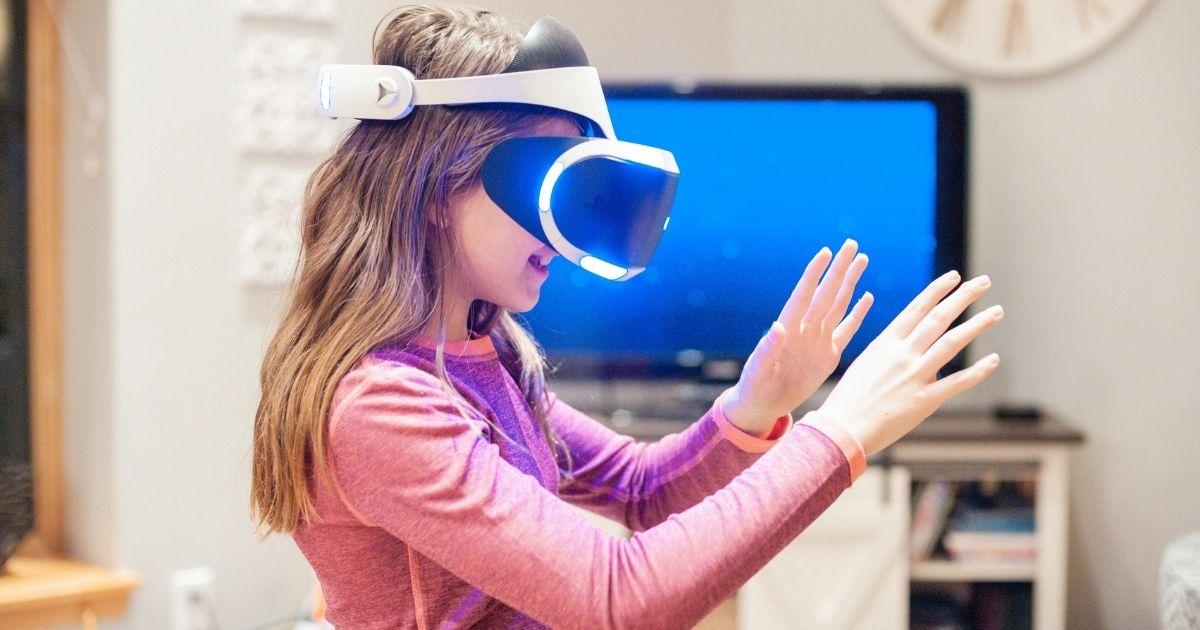
In recent years, augmented reality (AR) and virtual reality (VR) have shifted from futuristic buzzwords to real educational tools being used in classrooms across the United States. While traditional classroom instruction remains foundational, AR/VR technologies now offer practical ways to enhance learning — making abstract concepts tangible, putting students in immersive experiences, and increasing engagement at every grade level.
Virtual Field Trips: Expanding the Classroom Beyond Walls
One of the most widespread uses of VR in U.S. education is virtual field trips. These immersive experiences allow students to “visit” locations that would otherwise be inaccessible due to budget, distance, or time constraints.
Teachers can lead students on virtual visits to museums, national parks, historical landmarks, or even outer space — all from within a headset or classroom display. These experiences often align with social studies, history, geography, and environmental science curricula.
Why this is practical
It reduces logistical and financial barriers to experiential learning.
It deepens cultural and historical understanding through immersive context.
It helps students form stronger mental connections between academic content and real-world locations.
STEM Learning Through Simulations and Labs
AR and VR are particularly powerful in STEM education, where abstract concepts can be difficult to grasp through textbooks alone.
In physics, chemistry, and biology, VR simulations allow students to conduct experiments virtually — observing chemical reactions, testing motion and force, or exploring ecosystems — in a safe and controlled environment. Interactive 3D models help students examine anatomy, molecular structures, and engineering systems from multiple angles.
Practical STEM impact
It makes high-cost or potentially dangerous lab experiences accessible to more schools.
It promotes hands-on experimentation and critical thinking.
It improves retention by linking theory directly with interactive practice.
Anatomy and Life Sciences: Exploring Complex Structures
AR applications in biology and health education allow students to explore complex systems like the human body in ways that static diagrams cannot match.
Students can rotate, zoom, and isolate organs and body systems, understanding how they interact in real time. VR can simulate immersive journeys inside the human body or healthcare settings, offering experiential learning opportunities.
Why this is practical
It makes microscopic and complex structures accessible and manipulable.
It supports visual and kinesthetic learning styles.
It provides ethical alternatives to traditional dissection exercises.
Language and Cultural Immersion
VR also offers strong applications in language learning and cultural studies. Instead of relying solely on memorization, students can experience immersive environments where a language is used naturally.
Students may practice vocabulary in virtual marketplaces, city streets, or cultural settings that simulate real-world conversation. AR tools can enhance textbooks with live translations, pronunciation support, and contextual cultural information.
Why this is practical
It accelerates language acquisition through context-rich immersion.
It builds confidence in conversational skills.
It connects language learning to authentic cultural experiences.
Interactive AR for Mathematics and Geometry
Mathematics often presents challenges when students struggle with abstract spatial reasoning. AR brings these abstract concepts into a visual and interactive format.
Students can manipulate 3D geometric shapes, explore graphs in three dimensions, and visualize algebraic transformations in real time. This hands-on interaction strengthens conceptual understanding and reduces math anxiety.
Why this is practical
It improves spatial reasoning and visualization skills.
It supports diverse learning styles.
It makes abstract mathematical ideas more concrete and engaging.
Teacher Professional Development and Training
The impact of AR/VR extends beyond students. Teachers are using immersive simulations to refine instructional strategies and classroom management skills.
VR-based training scenarios allow educators to practice responding to classroom challenges in realistic environments without real-world consequences. This helps build confidence and supports reflective practice.
Why this is practical
It enhances teacher preparedness.
It supports ongoing professional development.
It accelerates adoption of innovative instructional methods.
Supporting Equity and Differentiation
AR/VR tools can be adapted to meet diverse learning needs. Adaptive immersive content can guide students through scaffolded lessons, offering personalized support based on performance.
Immersive environments also provide alternative pathways for students who may struggle with traditional instruction methods, making learning more inclusive.
Why this matters
It promotes inclusive classroom environments.
It supports differentiated instruction.
It offers alternative engagement methods for diverse learners.
Challenges to Broader Implementation
Despite strong potential, AR/VR adoption in U.S. classrooms faces practical challenges.
Cost and infrastructure requirements remain barriers for many districts. Teacher training is essential for meaningful integration. Ensuring equitable access across urban and rural schools is a critical concern. Successful implementation requires thoughtful planning, curriculum alignment, and sustained support.
Conclusion
AR and VR are no longer experimental technologies in U.S. education. When implemented strategically, they provide practical, measurable benefits — from immersive field trips and virtual science labs to language practice and math visualization.
The future of AR/VR in classrooms will depend not on novelty, but on how effectively schools integrate these tools into pedagogy. When aligned with learning objectives and supported with proper training, immersive technologies can meaningfully enhance teaching and learning across grade levels.